
Parts drawings and CAD data are the foundation of controlled industrial procurement. Having the drawings and CAD data for your parts gives you real purchasing freedom: less dependence on suppliers, comparable quotations, lower risk and better planning control.
Why having the drawings and CAD data for your parts gives you real purchasing freedom
In industry, procurement does not begin when you request a quotation. It starts much earlier: when you can clearly define the part you need, its requirements and its tolerances. This is where many companies discover an uncomfortable reality: they do not have the technical information for their own parts..
When no technical drawing or 3D CAD model exists — or when the available information is outdated, incomplete or of limited use — the company is at a clear disadvantage when sourcing the part. It can still purchase it, but with less flexibility and greater dependence on the supplier.
- Silent dependence: until circumstances change
- What changes when you have the technical documentation in-house?
- Comparing suppliers properly: what almost nobody does well
- Lower risk
- The key point: drawings and CAD data as an asset
- How do you obtain them if they do not exist?
- How FDS Projects can help
Silent dependence: until circumstances change
The problem with not having drawings and CAD data does not usually become apparent at first. In fact, the system often “works” for years: you order from the same supplier, quote the same part number, and that is it. But the dependence remains hidden and becomes apparent when something changes:
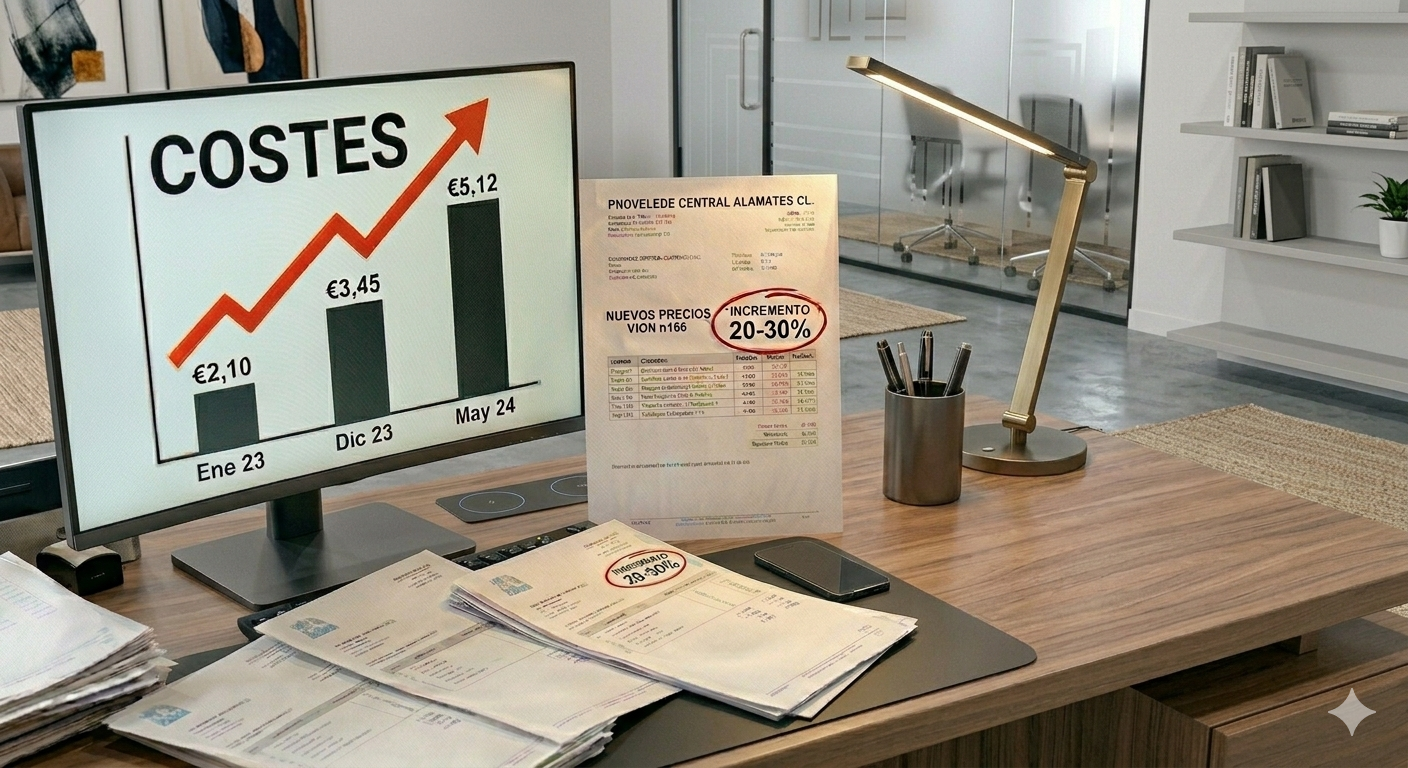
- Prices increase
- Lead times become longer
- The supplier is at full capacity
- The spare part is discontinued
- An urgent maintenance need arises and nobody can define the part accurately
In recent years, this has become even more critical due to an increasingly unstable environment: conflicts, tariffs, regulatory changes, logistics disruptions and rising energy costs. Within an industrial plant, all of this leads to the same result: greater variability in lead times, prices and availability. If the part is also undocumented — with no CAD model or drawing — the impact of any disruption is amplified.
At that point, you are no longer choosing a supplier. You are accepting their conditions. And that difference between choosing and accepting is precisely what separates controlled procurement from dependent procurement.
What changes when you have the technical documentation in-house?
Having the technical drawing and 3D CAD model means retaining control. When the part is properly defined, you can source it more effectively:
- You can request quotations from several suppliers on the same basis. Instead of sending a photograph, a sample or “something similar”, you provide a clear technical definition.
- You reduce “interpretations”. In industrial procurement, a significant share of hidden costs comes from this: each supplier interprets things differently, assumes tolerances, simplifies geometries or proposes changes that may not be immediately apparent. With a properly defined drawing, that uncertainty is dramatically reduced.
- Your company no longer depends on a third party for strategically important decisions: manufacturing the part again, adjusting a fit, changing a material, adapting a geometry or responding quickly when needed.
In short: technical documentation turns single-source procurement into an open purchasing process with multiple options..
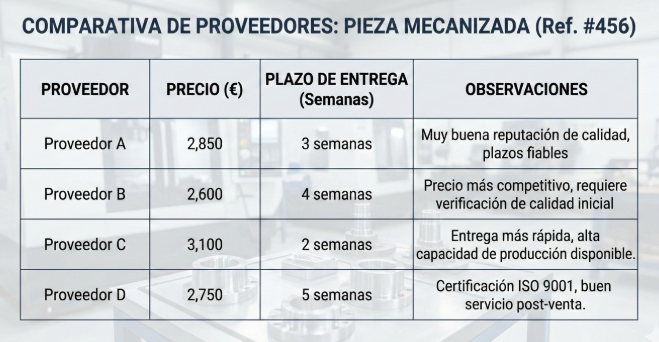
Comparing suppliers properly: what almost nobody does well
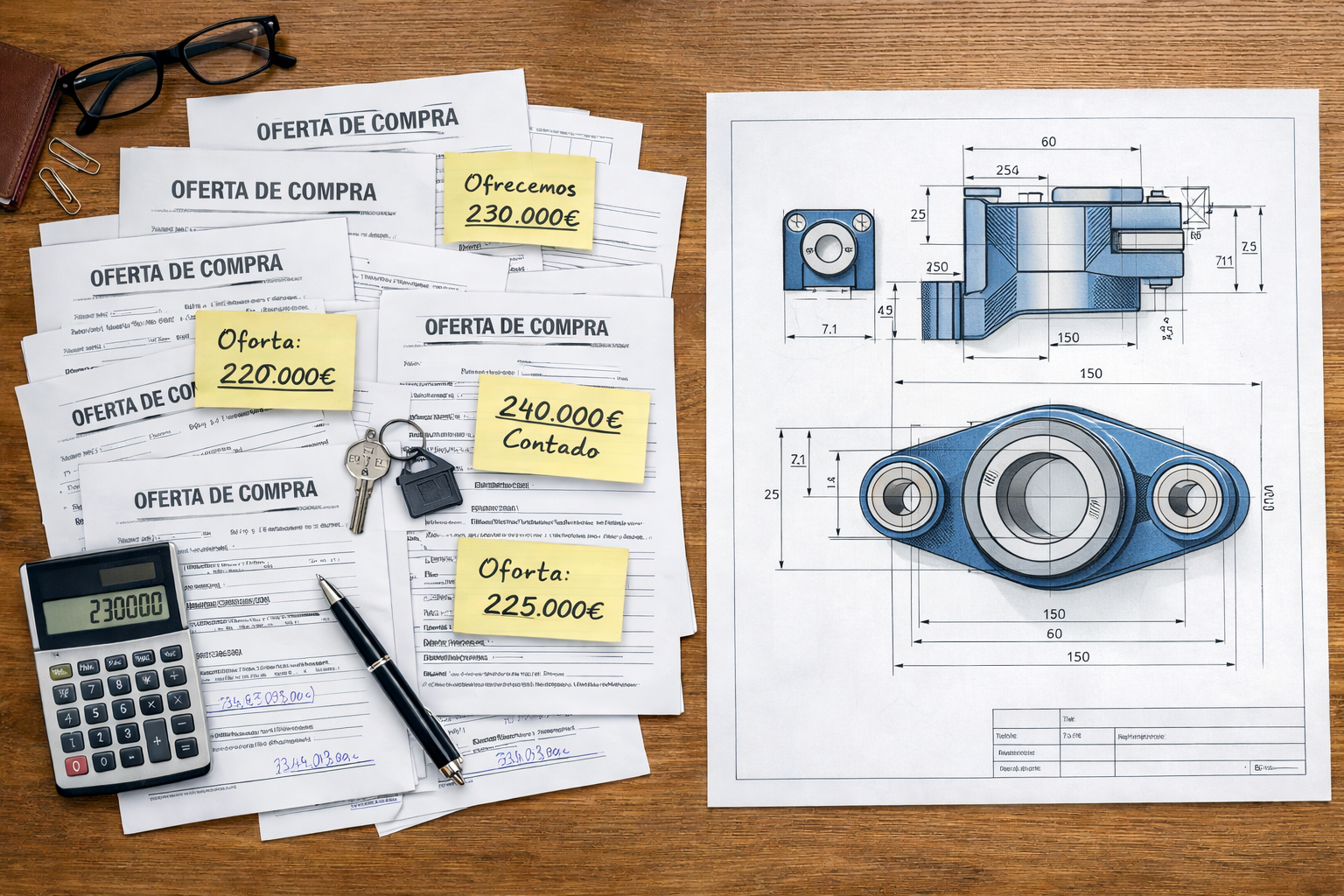
There is one phrase that sums up the problem very well: if it is not defined, it cannot be compared.
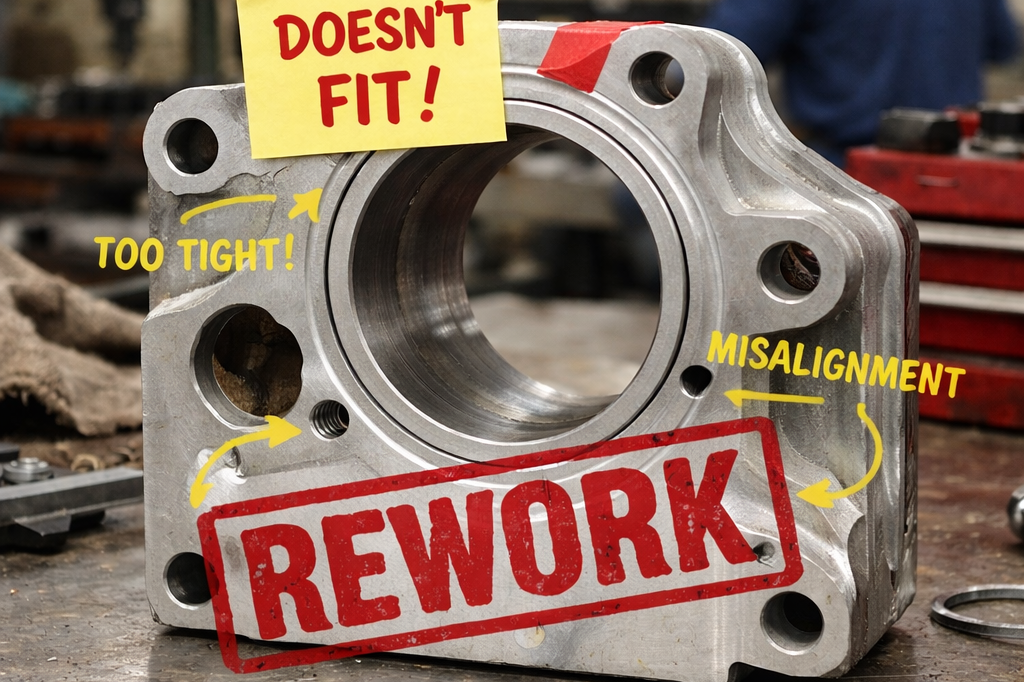
Requesting “three quotes” without a drawing often means requesting three different interpretations. One supplier may work with larger allowances, another may assume a different tolerance, while another may change the manufacturing process because a critical area is not clearly understood. Then, when the part arrives, the problems appear: excessive clearances, interferences, incorrect materials or treatments.
With a drawing and CAD model, the situation changes completely. You can compare suppliers on a like-for-like basis, and in an environment of variable costs, tight lead times and suppliers operating at full capacity, that is extremely valuable.
Lower risk
This is where some of the greatest savings come from, even though they may not appear directly in the accounts: reduced risk.
When a part is not properly documented, risk spreads throughout the entire process: rushed measurements, uncertainties during manufacturing, testing, corrections, additional iterations… and, in the worst case, downtime or a repair that takes longer because of a defective part.
Technical documentation reduces this risk by clearly defining what matters: critical dimensions, functional surfaces, assembly references and minimum acceptance criteria. It is not about filling a drawing with dimensions for the sake of it. It is about defining the features that matter so that procurement is reliable and repeatable.
In addition, when a 3D CAD model is available, checking fits, interferences and adaptations is much faster. This reduces the number of iterations and, consequently, the overall cost.
The key point: drawings and CAD data as an asset
At FDS Projects, we see it clearly: many companies treat drawings and CAD data as an “extra” — something to be produced if there is spare time or if the part is particularly complex. But that approach falls short.
In reality, technical information is an industrial asset. It gives you independence, the ability to respond quickly and greater negotiating power. Having a drawing and CAD model of a critical part will often cost far less than a single poorly managed emergency.
When your company has this information, it is in a much stronger position to:
- Expand the supplier base
- Renegotiate
- Reduce supplier dependence
- Respond quickly
- Keep knowledge where it belongs: within your company
How do you obtain them if they do not exist?
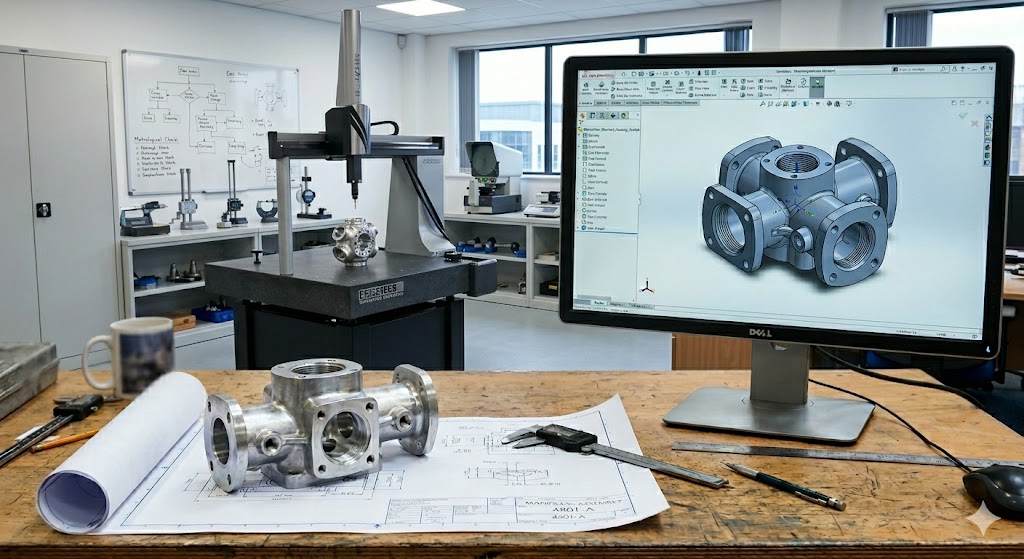
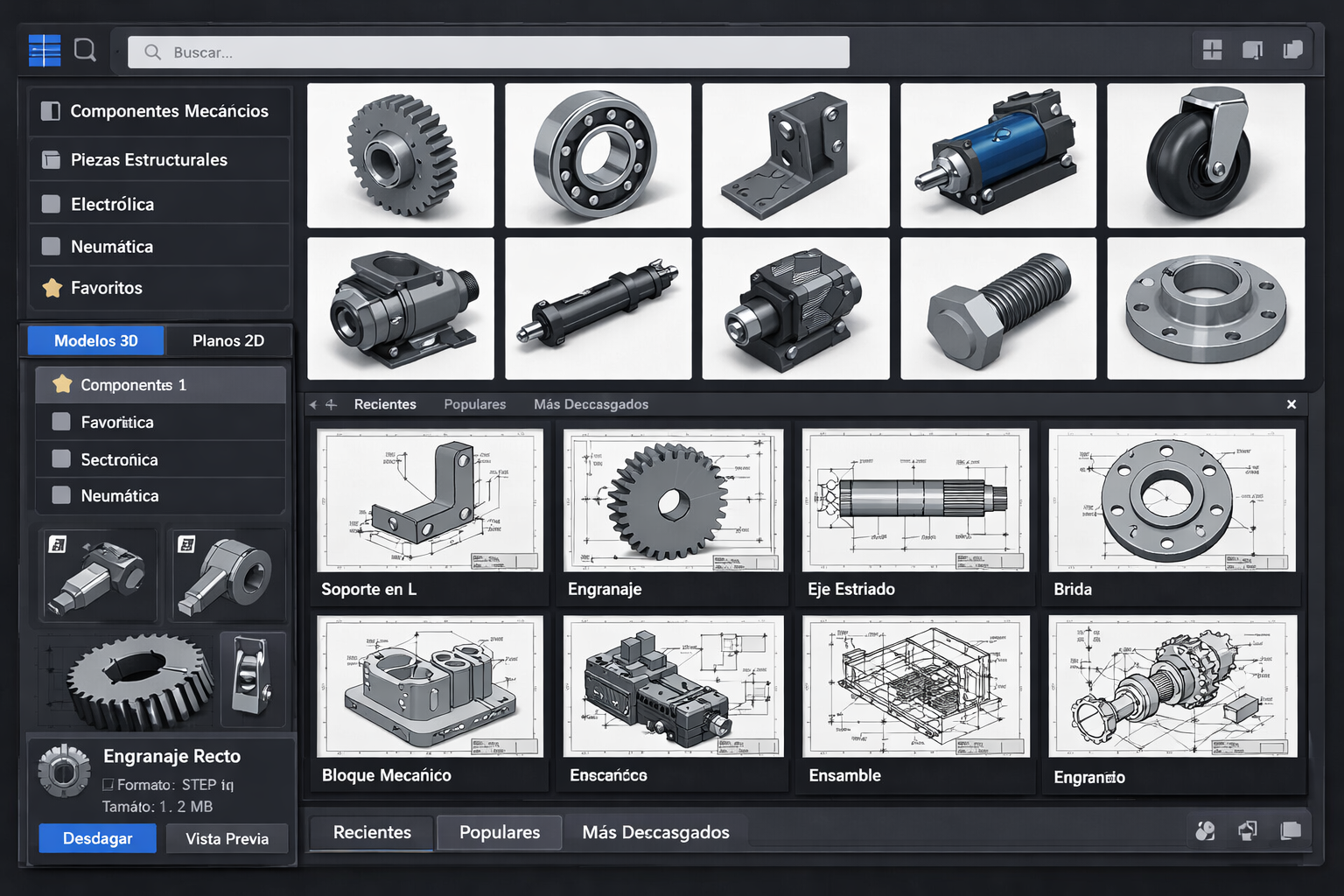
If no original drawing exists, that is not a problem: it can be recreated.
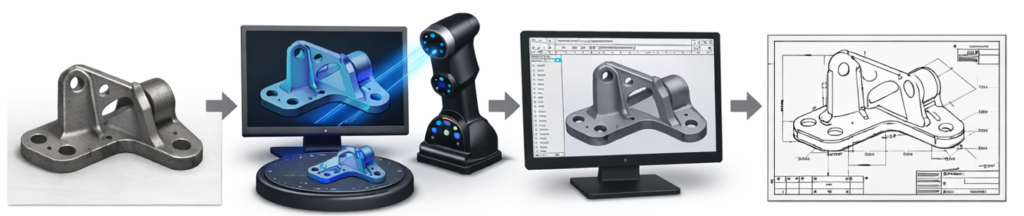
The usual process is:
- Start from a physical part or assembly
- Capture the geometry through measurement or 3D scanning, where appropriate
- Reconstruct a 3D CAD model designed for manufacturing
- Produce a technical drawing suitable for procurement and validation
The key is that the result should not simply be “a nice drawing”, but technical documentation that can actually be used to manufacture the part and compare suppliers without surprises.
How FDS Projects can help
At FDS Projects , we help industrial companies precisely in these situations: when a part has no drawing, a spare part is obsolete, there is only one available supplier, or a component needs to be replicated or adapted.
We deliver:
- Clean, usable 3D CAD models
- Technical drawings prepared for procurement and manufacturing
- Where required, geometric data capture through 3D scanning to ensure accuracy
The objective is simple: to give you genuine freedom when sourcing parts.
If you currently depend too heavily on a single supplier for a critical part, there is usually an underlying reason: the technical information is not within your company. Recovering that information is one of the most valuable medium-term decisions you can make, because it changes your purchasing position: instead of accepting conditions, you can choose between alternatives.
And in industry, that means control.

Do you have a part with no drawing, a discontinued spare part or a component that only one supplier can manufacture?
At FDS Projects, we help you create the CAD model and technical drawing you need to compare suppliers, reduce risk and retain control over your procurement.